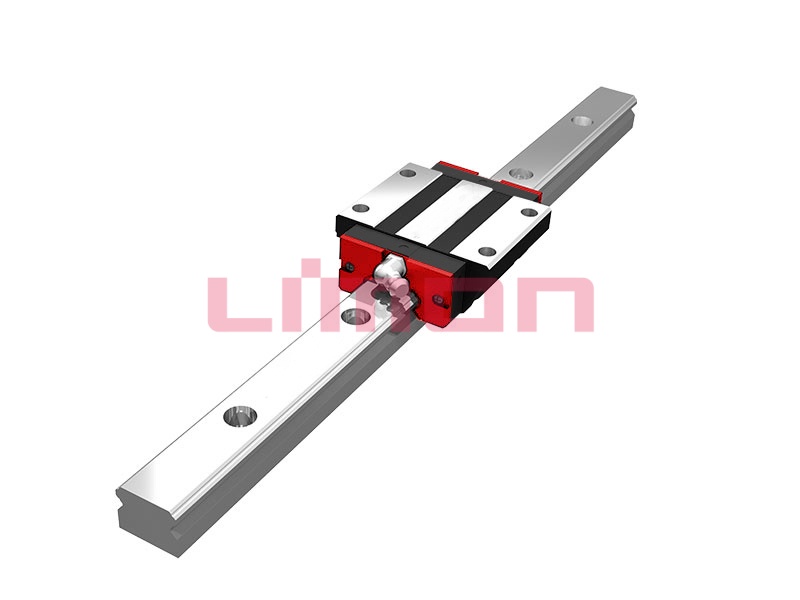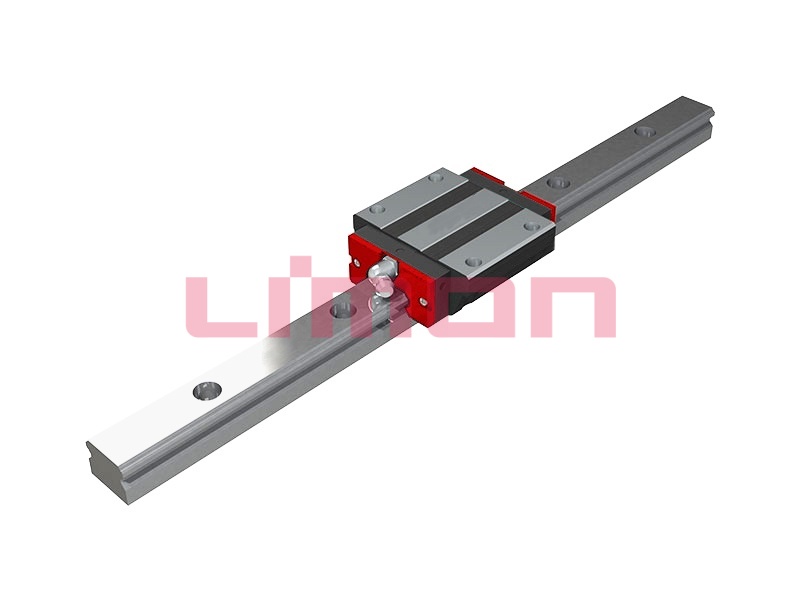
A dynamic load rating based on 50 km cannot be compared directly with one based on 100 km. For a ball-type linear guide using the same cubic life model, divide the 50 km rating by approximately 1.26 to express it on a 100 km basis. That conversion changes the reference basis, not the guide’s physical capability.
Before comparing two linear guideway quotations, check the life basis printed beside each dynamic rating. Also confirm that both values describe the same load direction and the same component quantity, such as one block rather than a complete machine axis.
Why the same guide can have two dynamic ratings
A dynamic rating is associated with a reference travel life. A larger load corresponds to a shorter calculated fatigue life, so a rating quoted at 50 km is numerically larger than its equivalent quoted at 100 km.
The usual simplified life relationship is:
L = Lref × (C / P)p
Here, L is calculated travel life, Lref is the reference distance, C is the dynamic rating, P is the equivalent applied load and p is the life exponent. Keep C and P in the same force units. Thomson’s profile-rail catalog gives p = 3 for ball guides and p = 10/3 for roller guides, and documents the change of rating basis.
This simplified calculation does not predict contamination failure, mounting damage or lubrication starvation. A purchasing comparison still needs installation and application conditions.
Convert the reference distance, then compare
For the same guide and equivalent-load definition:
C100 = C50 × (50 / 100)1/p
For ball guides, this becomes C100 ≈ 0.7937 × C50. The inverse is C50 ≈ 1.2599 × C100. For roller guides using p = 10/3, the corresponding factors are approximately 0.8123 and 1.2311. Do not apply the ball-guide factor to a roller-guide comparison.
Keep the source catalog’s rounding. Small differences between a converted value and a printed value can arise from rounding; they are not evidence of a manufacturing difference.
Worked comparison of two hypothetical quotations
Assume both quotations describe comparable ball guides and use the same load direction. These are demonstration values, not LIMON model specifications.
| Item | Quotation A | Quotation B |
|---|---|---|
| Printed dynamic rating | 25.2 kN | 21.0 kN |
| Printed reference life | 50 km | 100 km |
| Rating expressed at 100 km | 20.0 kN, approximately | 21.0 kN |
| Assumed equivalent working load | 5.0 kN | 5.0 kN |
| Simplified calculated travel life | About 6,400 km | About 7,409 km |
For A, 50 × (25.2 / 5)3 is about 6,401 km. For B, 100 × (21 / 5)3 is about 7,409 km. A’s larger printed rating therefore does not make it the stronger result under these assumptions.
The practical contribution of the table is a common comparison basis. It is not a recommendation to choose B without checking stiffness, dimensions, static loads, operating conditions and other requirements.
Dynamic rating, static rating and machine payload are different
The basic static load rating C0 is a separate quantity. It should not be converted using the dynamic life-distance equation. Static safety, transient shock and moment loading need their own checks.
Nor should four block ratings simply be added and called the machine payload. An offset center of gravity or acceleration can load the blocks unevenly. The guide system’s geometry determines the load on each block, and the most demanding block or direction may govern.
Put these fields in the supplier comparison sheet
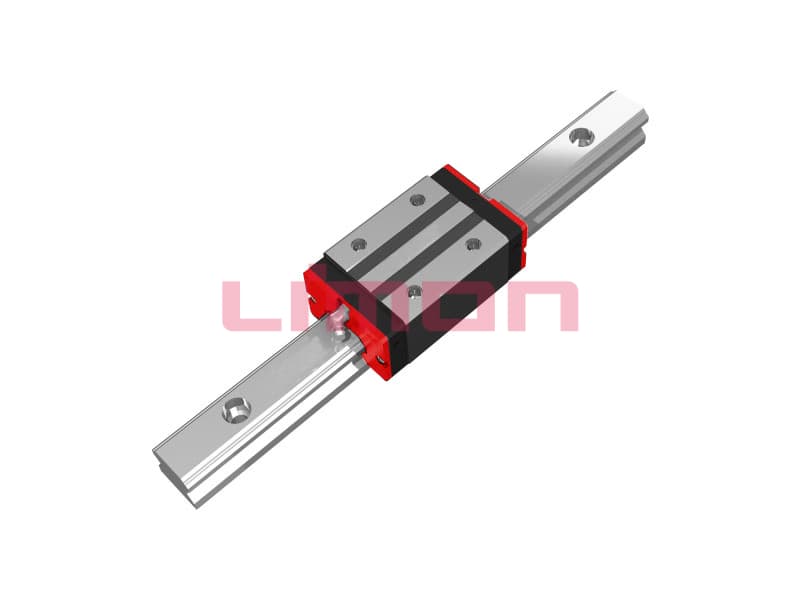
Record the rolling-element type, model and block length, C, C0, the life basis for C, load direction, moment ratings, preload and accuracy class. Add rail length, carriage quantity, seals and lubrication arrangement so that the comparison describes a usable assembly.
THK’s rated-load guidance also calls attention to the 50 km versus 100 km basis. Manufacturer-specific corrections and equivalent-load definitions must be checked before using catalog values in a life calculation.
For repeated OEM purchases, request that the supplier identify the catalog revision and whether each rating applies to a single block. This makes later substitutions easier to review and prevents an apparently improved number from masking a changed convention.
Does a 100 km rating mean the guide must be replaced after 100 km?
No. The reference distance defines the rating convention used in the calculation. It is not a scheduled replacement interval. Actual maintenance and replacement decisions depend on the operating condition and the machine’s performance requirements.
Для LIMON H Series comparison, send the duty cycle, load direction, block arrangement, required travel life and any competing specification you need normalized. Ask LIMON to identify the rating basis alongside the proposed model, rather than comparing C values alone.