Are vibration, positioning errors, or uneven movement reducing the precision and reliability of your linear motion equipment?
Guide rails provide controlled, low-friction linear movement while supporting loads and maintaining alignment. The right linear guide can improve positioning accuracy, rigidity, smoothness, and service life in automation, CNC machines, robotics, and 3D printers.
Let’s explore how guide rails work, which types fit different applications, and how to select the right solution.
What Are Guide Rails and Why Are They Important?
Guide rails are mechanical components that support and guide moving parts along a defined linear path. In a linear motion system, they work with guide blocks, bearings, or other rolling elements to reduce friction while maintaining accurate movement.
A well-designed guide rail system helps prevent unwanted lateral movement, vibration, and deflection. This is particularly important for equipment that requires repeatable positioning, such as CNC machines, automation systems, inspection equipment, robotics, and precision manufacturing machinery.
The selection of guide rails should consider load capacity, travel length, speed, rigidity, accuracy, installation conditions, and expected operating life. Using an undersized guide can lead to excessive wear or positioning instability, while an oversized system may increase cost and installation requirements unnecessarily.
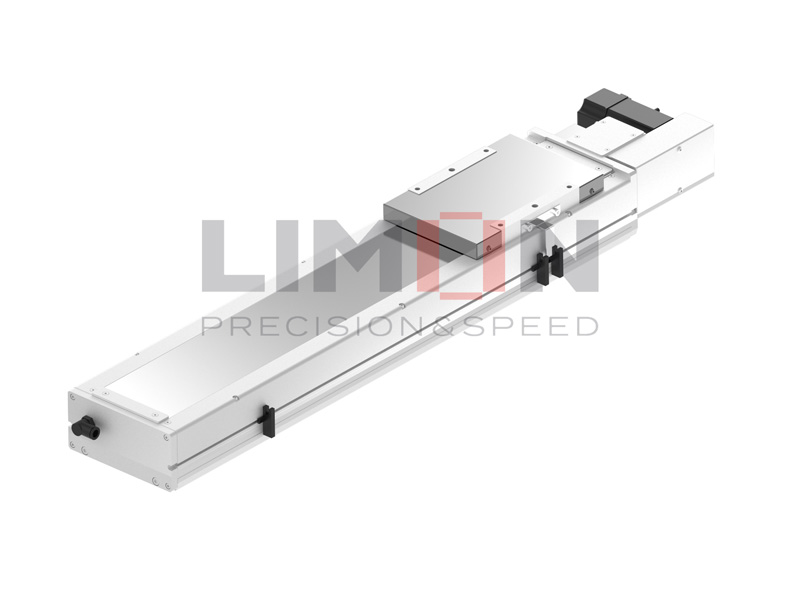
Limon manufactures linear motion products including linear guide rails, ball screws, linear bearings, and linear actuators. With an integrated production line, Limon can maintain consistent manufacturing standards while providing customers with direct access to product and technical support.
What Is a Roller Type Linear Guideway?
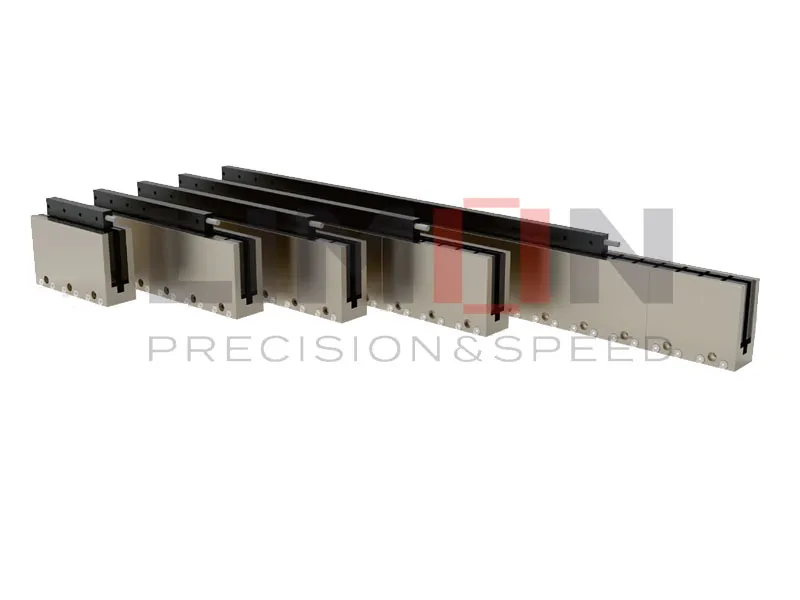
A roller type linear guideway uses rollers rather than balls as the rolling elements between the rail and guide block. Because rollers generally provide a larger contact area, this design can deliver high rigidity, load capacity, and resistance to deformation.
Roller-type guides are particularly useful for demanding industrial applications where the system must handle substantial loads while maintaining stable movement. They can be found in machine tools, heavy automation equipment, industrial robots, and other precision machinery.
Compared with ball-type guideways, roller systems may offer advantages in rigidity and load handling, although the appropriate choice depends on the application’s speed, accuracy, preload, and operating environment.
When selecting a roller type linear guideway, engineers should evaluate both static and dynamic load requirements. Installation accuracy is also important because misalignment can affect smoothness, noise, and service life.
Limon’s integrated manufacturing capabilities help provide consistent linear motion components for industrial applications. Customers can also communicate directly with Limon when they need assistance choosing a suitable guide rail based on load, speed, stroke, and precision requirements.
How Do Guide Rails Support High-Precision Applications?
Precision guide rails are essential when equipment must move repeatedly along a controlled path. The rail provides the reference surface, while the guide block and rolling elements allow the moving component to travel with minimal friction.
In applications such as CNC machines and automated inspection equipment, even small amounts of movement error can affect final product quality. A properly selected guide rail helps maintain alignment and reduce unwanted movement during acceleration, deceleration, and changes in load.
Guide rail performance is influenced by rail geometry, material quality, preload, manufacturing tolerances, lubrication, and installation. For this reason, choosing a linear guide based solely on dimensions may not provide the best result.
Limon focuses on high-quality linear motion components manufactured through an integrated production process. This approach allows us to control important manufacturing stages and provide products designed for reliable industrial operation. Our technical support can also help customers match guide specifications to their actual equipment requirements.
Can Linear Guides Be Used for 3D Printers?
Yes. Linear guides for 3D printer applications can provide smoother and more controlled movement for printer axes. They are especially useful when the machine requires repeatable positioning and reduced mechanical play.
A 3D printer may use linear guides to control the movement of the print head, build platform, or other moving components. Compared with simpler sliding mechanisms, rolling-element linear guides can reduce friction and provide more consistent travel when properly installed.
The appropriate guide depends on printer design, load, travel distance, required accuracy, and available installation space. Compact systems may prioritize small guide dimensions, while larger industrial 3D printers may require greater rigidity and load capacity.
When designing or upgrading a 3D printer, engineers should also consider rail alignment, mounting surfaces, lubrication, and environmental conditions. These factors can have a significant impact on long-term motion performance.
Limon provides linear motion products suitable for different automation and precision equipment requirements. By purchasing directly from the manufacturer, customers can discuss their application requirements and receive technical guidance rather than relying only on standardized product selection.
What Is a Ball Screw Linear Rail System?
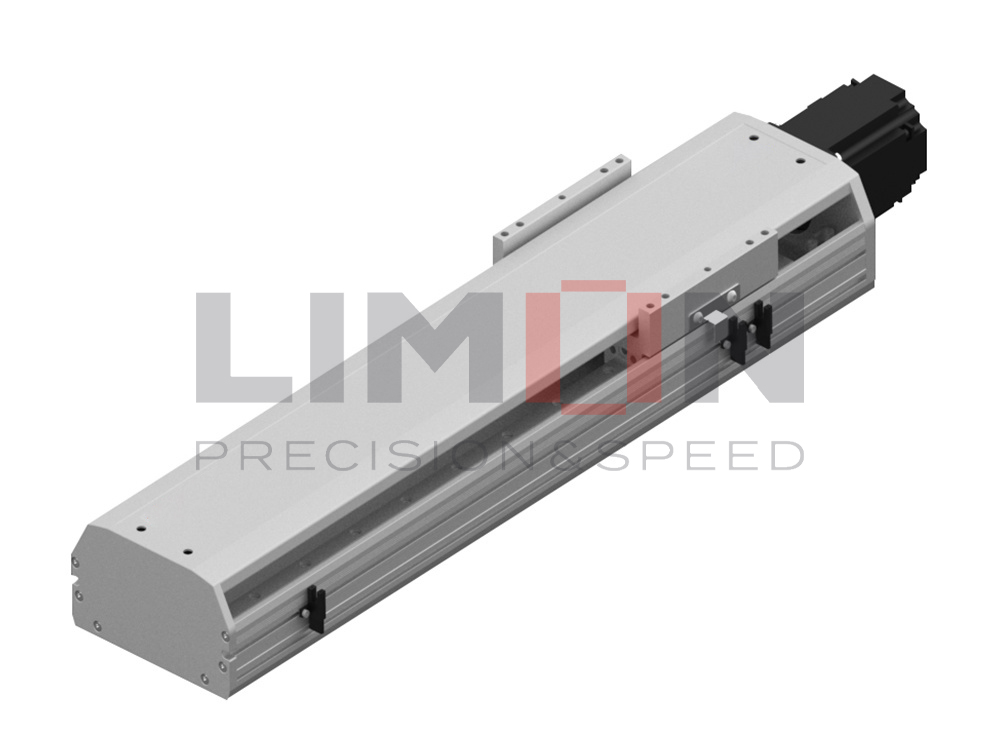
A ball screw linear rail system combines a ball screw drive with linear guide rails to create controlled and accurate linear movement. The ball screw converts motor rotation into linear motion, while the guide rail supports and guides the moving load.
This combination is widely used in CNC equipment, automation machinery, positioning systems, and other applications requiring accurate movement and high mechanical rigidity.
The ball screw and guide rail perform different functions, so both need to be selected correctly. The ball screw should match requirements such as thrust, speed, lead, accuracy, and service life. The guide rail should be selected according to load, moment capacity, rigidity, and travel conditions.
A properly matched system can provide stable movement and repeatable positioning while reducing friction and mechanical wear.
Limon’s product portfolio includes both ball screws and linear guide rails, allowing customers to source complementary motion components from the same manufacturer. Our integrated production capabilities and direct-sales model help simplify sourcing while maintaining communication between the customer and manufacturer.
How Do You Choose the Right Guide Rails?
The best guide rail is determined by the application’s actual operating requirements. Start by identifying the load, stroke, speed, accuracy, rigidity, installation space, and operating environment.
For heavy-duty machinery, load capacity and rigidity may be the highest priorities. For high-speed automation, smooth movement and suitable dynamic performance become more important. Precision equipment may require tighter tolerances and appropriate preload.
You should also consider the rail length and mounting configuration. Long-travel applications require careful attention to rail installation and alignment. Environmental factors such as dust, moisture, temperature, and contamination should also influence the selection.
For specialized applications, a roller type linear guideway may be preferable when high rigidity and load capacity are required. For compact equipment such as 3D printers, appropriately sized linear guides can provide accurate movement without excessive system weight.
Limon helps customers evaluate these factors before purchasing. With an integrated production line, direct sales, high-quality products, and technical support, Limon provides practical linear motion solutions for different industrial applications.
Заключение
Guide rails are fundamental to reliable linear motion. From precision machinery and automation systems to linear guides for 3D printer applications and ball screw linear rail systems, the right guide can improve stability, accuracy, and operating life.
Limon provides reliable, high-performance linear motion solutions backed by integrated manufacturing, direct sales, and professional technical support.
Choose Limon for dependable guide rails and linear motion components designed for demanding industrial applications.