Need to turn precise straight-line movement into controlled rotation without sacrificing efficiency, accuracy, or reliability?
Featured Snippet: Linear motion can be converted to rotational motion using mechanisms such as racks and pinions, lead screws, ball screws, and crank systems. The best method depends on required torque, speed, stroke, accuracy, efficiency, and motion profile.
Let’s compare the main mechanisms and explain how to choose the right solution.
What Does Conversion of Linear Motion to Rotary Motion Mean?
Сайт conversion of linear motion to rotary motion describes a mechanical process in which movement along a straight path is transformed into rotation around an axis. This principle is useful when a machine produces or controls linear displacement but the final mechanism requires rotary output.
The conversion can work in several ways. A rack can move linearly and rotate a pinion gear, while a crank mechanism can transform reciprocating linear movement into continuous or oscillating rotation. Screw-based mechanisms can also transfer motion between linear and rotary components depending on which element is driven.
Understanding the direction of energy transfer is important. A motor can rotate a screw to create linear movement, but the same basic screw relationship can also be used in reverse under suitable conditions. Engineers must consider efficiency, friction, backlash, load, speed, and whether the mechanism is intended to operate continuously or intermittently.
For modern automation equipment, this conversion is rarely considered in isolation. The transmission mechanism must work together with motors, bearings, guides, actuators, and control systems. Limon focuses on complete linear motion solutions, helping customers select components according to actual system requirements.
Which Mechanisms Can Convert Linear Motion to Rotational Motion?
Several mechanical mechanisms can convert linear motion to rotational movement, but each has different characteristics.
- Rack and pinion: Linear movement of the rack rotates the pinion. It is useful for continuous motion and relatively direct mechanical transmission.
- Crank mechanism: Reciprocating linear movement can generate rotary motion, making it common in engines and reciprocating machinery.
- Lead screw systems: A screw and nut can exchange rotational and linear movement depending on which component is driven.
- Ball screw systems: Similar to lead screws but designed for efficient, precise motion through recirculating balls.
- Cam mechanisms: Linear follower movement can be converted into controlled rotary movement according to a specific cam profile.
The correct choice depends on the application. A rack and pinion may be preferable for long continuous travel, while a ball screw can be more appropriate when precision and controlled positioning are priorities. Limon provides ball screws, linear guides, bearings, and actuators that can be integrated into these types of motion systems.
How Does a Ball Screw Support Linear-to-Rotary Motion Conversion?
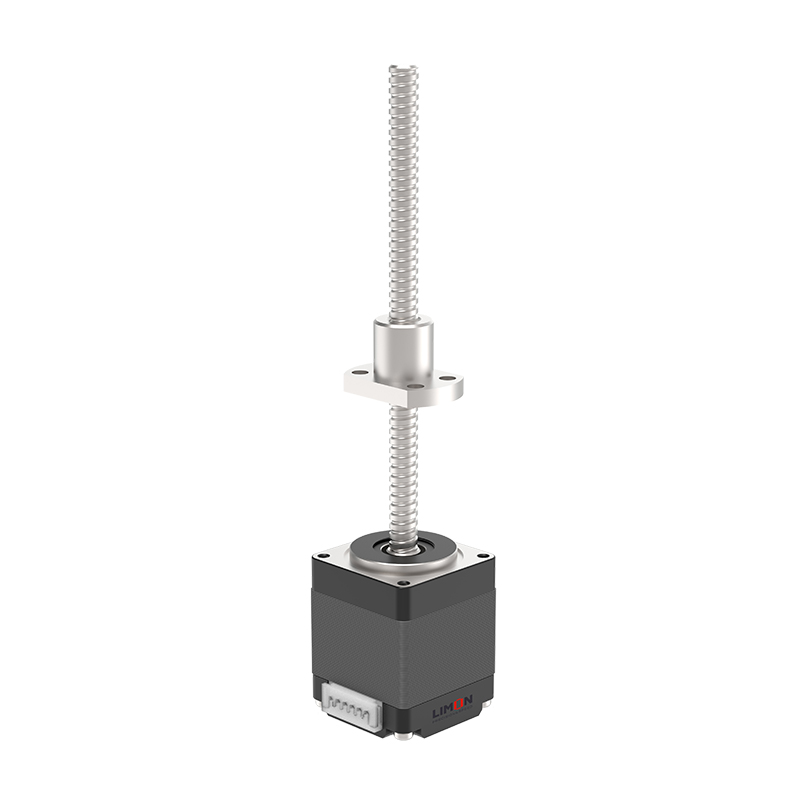
Ball screws are particularly interesting because they provide a highly efficient relationship between rotary and linear motion. When a motor rotates the ball screw, the ball nut travels along the screw, producing controlled linear movement. If the mechanical system is driven from the opposite direction, linear movement can potentially produce screw rotation, depending on the screw design, friction, preload, and external load.
This makes ball screw technology useful in systems where engineers need a predictable relationship between motor rotation and linear displacement. Screw pitch determines how much linear travel occurs during each revolution, while preload can reduce backlash and improve positioning performance.
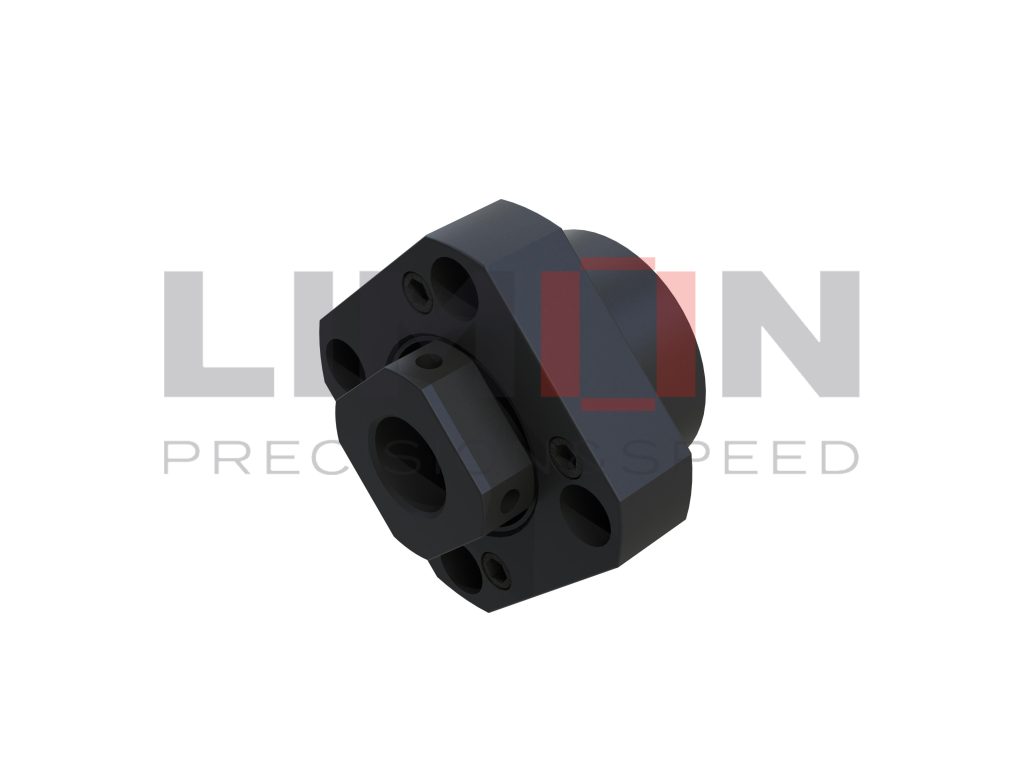
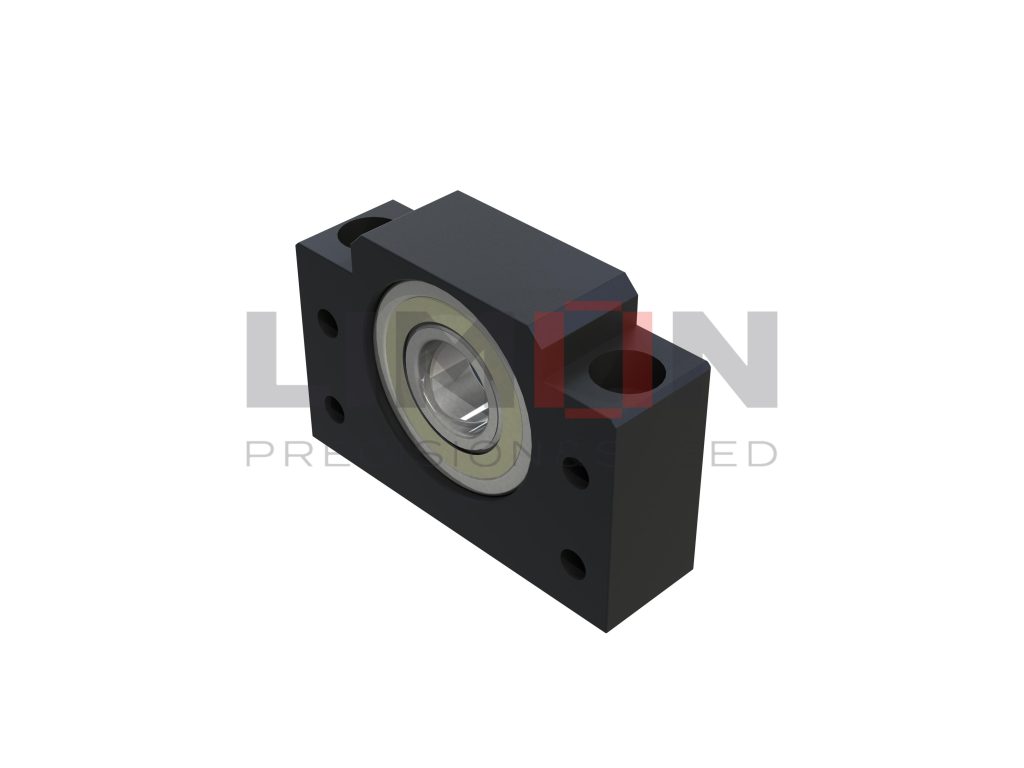
However, reverse driving is not automatically suitable for every ball screw application. Engineers must evaluate efficiency, load, acceleration, safety, lubrication, and whether the system needs to resist back-driving. The mechanical design should also include appropriate bearings and guides to maintain alignment.
Limon manufactures ball screws and complementary linear motion components under an integrated production system. By sourcing compatible components from one experienced manufacturer, customers can simplify system matching and receive more focused technical support.
How Do Rack and Pinion Systems Compare with Screw Mechanisms?
Rack and pinion systems provide a direct method of converting linear motion to rotational motion. When a rack moves along its axis, its teeth engage with a pinion gear, causing the pinion to rotate. The relationship between rack travel and pinion rotation is determined by the gear geometry and pitch.
This approach is useful when long linear travel, continuous movement, or relatively high speed is required. Unlike a screw mechanism, a rack and pinion does not depend on a long rotating screw shaft for extended travel. However, backlash, tooth engagement, lubrication, noise, and alignment must be considered when designing a precision system.
Screw mechanisms can provide advantages when positioning accuracy, high thrust, or controlled linear displacement is more important. Ball screws are especially suitable for precision applications where efficiency and repeatability are important.
Therefore, the best mechanism depends on the complete motion profile rather than simply the required direction of movement. Limon’s experience with linear guides, ball screws, bearings, and actuators allows customers to evaluate the transmission as part of a complete linear motion system.
What Factors Matter When Converting Linear Motion to Rotational?
When converting linear motion to rotational motion, several engineering parameters should be evaluated before selecting a mechanism:
- Torque: Determine the rotational torque required by the driven component.
- Linear force: Calculate the force available from the linear input.
- Скорость: Consider both linear velocity and required rotational speed.
- Инсульт: Define the available linear travel and required rotary displacement.
- Эффективность: Account for friction and mechanical transmission losses.
- Backlash: Minimize unwanted clearance when precise positioning is required.
- Duty cycle: Consider operating frequency, acceleration, and continuous loading.
- Alignment: Ensure guides, bearings, and transmission components remain correctly aligned.
The relationship between force and torque is particularly important. A mechanism may provide sufficient linear force but still fail to generate the required rotary torque because of an unsuitable transmission ratio or mechanical geometry.
Limon can help customers evaluate these requirements before selecting a ball screw, linear guide, bearing, or actuator. This application-focused approach helps avoid choosing components based solely on catalog specifications.
Where Is Linear-to-Rotary Motion Conversion Used?
Linear-to-rotary conversion appears in many industrial and mechanical systems. Automation equipment may use linear actuators to position mechanisms that subsequently rotate a tool or workpiece. Packaging machinery can use mechanical transmissions to synchronize linear feeding with rotary cutting or sealing operations.
Robotics is another important area. A linear actuator may control the position of a mechanism while a rack, crank, or other transmission converts that displacement into angular movement. In specialized machinery, controlled linear movement can also be used to adjust valves, rotate fixtures, change tool positions, or control mechanical linkages.
CNC and industrial equipment can combine several transmission principles within the same machine. The choice depends on required accuracy, force, speed, available space, and control architecture.
Limon’s integrated production capabilities are particularly valuable for these applications because linear motion performance depends on more than one component. Linear guides, ball screws, bearings, and actuators must be properly matched to maintain smooth and reliable operation.
Why Choose Limon for Linear Motion Conversion Solutions?
Successful motion conversion starts with selecting the correct mechanical principle, but reliable operation depends on manufacturing quality and system integration. Poorly matched components can lead to excessive friction, vibration, backlash, premature wear, or unstable positioning.
Limon provides linear motion products including ball screws, linear guide rails, linear bearings, and linear actuators. Our fully integrated production line gives us greater control over manufacturing and quality management, while our direct-sales model allows customers to communicate with the manufacturer without unnecessary intermediaries.
For OEM developers, automation engineers, machine builders, and industrial buyers, Limon can provide technical support based on the application’s actual load, speed, stroke, accuracy, and operating environment. Instead of treating each component as an isolated product, we focus on creating reliable and high-performance linear motion solutions that work as part of the complete machine.
Заключение: Converting linear motion to rotational motion can be achieved through rack and pinion systems, crank mechanisms, screws, ball screws, and other mechanical transmissions. The ideal solution depends on torque, force, speed, accuracy, efficiency, stroke, and operating conditions.
With a fully integrated production line, direct manufacturer support, and a complete range of linear motion products, Лимон provides reliable, high-performance solutions for demanding industrial applications.