Misalignment or inefficiency in the motion system can reduce precision and increase wear. Appropriate linear bearings can achieve smooth, precise, and low – friction linear motion, thus solving these problems. Here’s how they work.
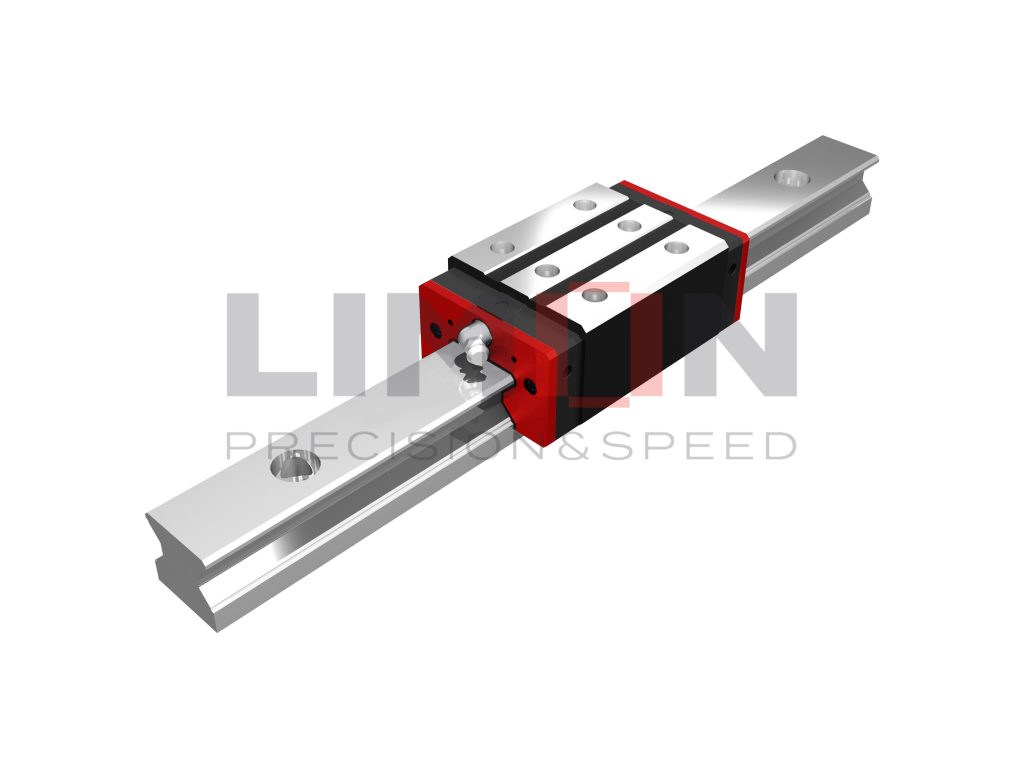
Linear bearings are mechanical components that can achieve linear motion with minimal resistance. There are two types of linear bearings, ball – type and roller – type, which are key components for the precise and efficient operation of automated machinery and precision equipment.
Understand the working principles, types, specifications and industrial applications.
What is a linear motion bearing?
Linear motion bearing is a type of mechanical bearing designed to guide and support linear movement while achieving minimal friction. Unlike rotary bearings that enable circular motion, linear bearings allow movement along a single axis – which is crucial in many industrial, manufacturing, and automation systems.
These bearings consist of rolling or sliding elements, such as balls or rollers, within a bearing block or raceway. When used in conjunction with a hardened shaft or guide rail, linear motion bearings can provide smooth and controlled movement in any direction, thereby enhancing the accuracy and repeatability of mechanical systems.
According to the design, linear motion bearings can be used in conjunction with the following devices:
Прокатный контакт (such as ball or roller types)
Скользящий контакт (such as plain sleeves)
Воздушная или магнитная левитация (non – contact solutions)
Linear motion bearings are fundamental components in robots, CNC machines, 3D printers, medical equipment, etc. Precise and consistent motion is crucial for their performance.

How do linear ball bearings work?
Линейные шарикоподшипники use recirculating steel balls to reduce friction between the moving carriage and the linear shaft. The design is simple yet highly effective for low – load, high – speed applications.
- Outer shell: It encloses the internal raceways and balls.
- Ball retainer: It guides and maintains the spacing of the balls.
- Шары: Usually made of hardened steel, the balls roll along the shaft and recirculate back to the starting point.
- End seals or rings: They prevent the balls from escaping and provide dust protection.
When the shaft moves linearly within the bearing, the balls rotate and roll along the surface of the shaft, supporting the applied load. When they reach the end of the stroke, they circulate along the return path inside the retainer and then continue to roll again.
The main advantages of linear ball bearings include:
- Low friction: Ensures efficient movement and minimal wear.
- Высокая точность: Reduces positional deviation, making it suitable for precise work.
- Easy replacement: Simple to install and replace.
- Compact design: Saves space while delivering high – performance.
However, they require a clean environment and shaft alignment to extend their service life. In dusty or high – load environments, other types of bearings may perform better.
Types of linear bearings
There are various types of linear bearings, each designed to meet different performance requirements, environmental conditions, and cost considerations. They are mainly divided into two categories: шарикоподшипники и роликовые подшипники, but there are also other types.
1.Linear Ball Bearing
2.Linear Roller Bearing
These bearings use cylindrical rollers instead of balls. They have higher load – carrying capacity and rigidity, making them ideal for heavy – duty applications. The rollers distribute the load over a larger surface area, thus reducing wear.
Applications: Machine tools, heavy – duty processing equipment, presses.
3.Sleeve Bearings
These bearings use sliding motion without the need for rolling elements. They are usually self – lubricating and suitable for contaminated or high – vibration environments.
Преимущества:
4.Воздушные подшипники
These technologies create a thin film of pressurized air between surfaces, enabling almost zero friction. They are highly suitable for ultra – high – precision applications such as semiconductor manufacturing.
5.Магнитные подшипники
Specifications of Linear Ball Bearings
Selecting the appropriate linear bearing requires analyzing several specifications that determine its compatibility and performance within a system. The following are some of the most critical parameters:
1.Inner Diameter and Outer Diameter
The inner diameter (ID) must match the shaft size, while the outer diameter (OD) determines compatibility with the mounting housing.
Common size ranges from 6 mm to 80 mmВ зависимости от нагрузки и ограниченного пространства.
2.Длина и ход
The total length of the bearing affects the stroke it can withstand. Longer bearings generally can bear greater loads and offer better rigidity.
3.Номинальные значения динамической и статической нагрузки
Dynamic Load: The load that the bearing can withstand during motion within a certain service life.
Static Load: The maximum load it can withstand when stationary without deformation.
4.Класс допуска
Линейные подшипники бывают нескольких классов точности:
C (нормальный) – For general use
H (высокий) – More suitable for semi – precision applications
P (точность) – Necessary for high – precision systems such as metrology
5.Материалы
Most linear bearings are made of hardened chromium steel or stainless steel. Stainless – steel bearings have corrosion – resistant properties, which are crucial for food processing or medical equipment.
6.Уплотнение и смазка
Sealed bearings prevent contamination, while open – type bearings can be lubricated regularly. Self – lubricating bearings are made of polytetrafluoroethylene (PTFE) or resin materials, enabling maintenance – free operation.
Understanding these specifications ensures optimal accuracy, durability, and cost – effectiveness of your system.
Applications of Linear Bearings
Линейные подшипники are widely used in industries that require precise and repeatable motion. Their versatility makes them suitable for various application environments, ranging from light – load to heavy – load conditions.
1.Станки с ЧПУ
Linear bearings are used to guide the spindles, tool holders, and gantry axes in CNC milling machines, lathes, and grinders. They can maintain good repeatability and accuracy under high loads and vibration conditions.
2. 3D-принтеры и лазерные граверы
Linear bearings are employed to control the movement of print heads and laser modules, contributing to improved resolution and printing quality.
3.Медицинское оборудование
Imaging tables, surgical robots, and patient positioning systems use linear bearings to achieve smooth, quiet, and controllable motion.
4.Производство полупроводников
Clean – room – compatible bearings such as air bearings and magnetic bearings enable particle – free and high – precision motion in wafer handling and inspection.
5.Автоматизация завода
Pick – and – place systems, robotic arms, and packaging machinery rely on linear bearings for fast, accurate, and reliable motion.
6.Автомобильная сборка
In production lines, linear bearings support transportation mechanisms, robotic devices, and test benches where high – speed linear motion is required.
Whether in precision – driven applications or harsh industrial environments, linear bearings play a crucial role in improving motion control and system efficiency.
Резюме
Linear bearings enable smooth, precise, and long – lasting linear motion, which is essential for automation, CNC machines, medical, and high – tech industrial applications. If you have any questions, please contact [email protected]