Is unreliable linear movement causing poor positioning, slower cycles, excessive maintenance, or costly downtime in your equipment?
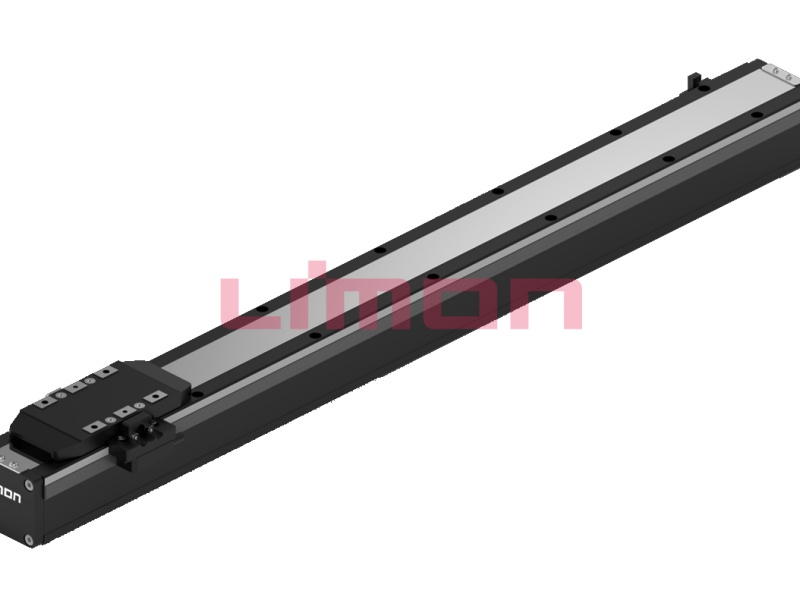
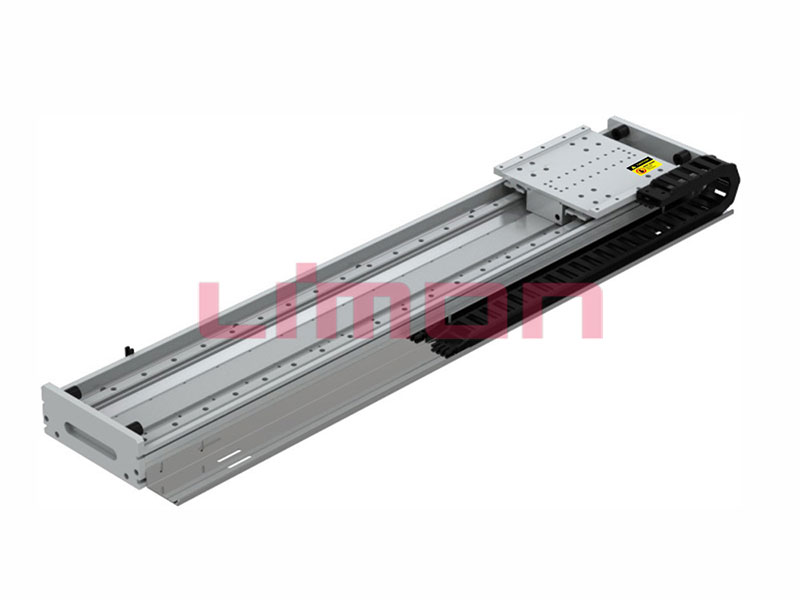
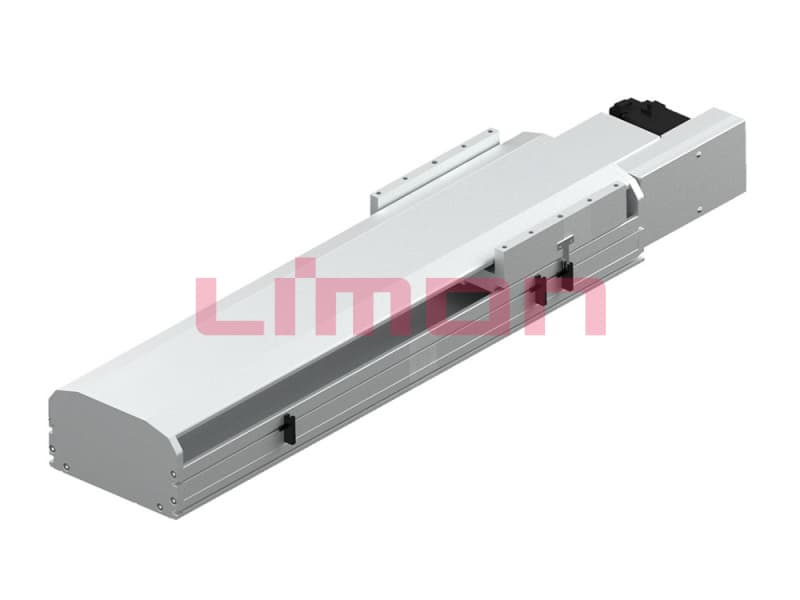
A linear actuator is a device that converts energy into straight-line motion. It pushes, pulls, lifts, lowers, or positions a load. Electric actuators commonly use a motor with a ball screw, lead screw, belt, or gearbox, while hydraulic and pneumatic actuators use pressurized fluid or air.
This guide explains actuator operation, components, types, applications, benefits, selection criteria, and future development.
¿Qué es un actuador lineal y cómo funciona?
Many buyers search what is linear actuator when they need to automate a movement that currently depends on manual adjustment or rotary machinery. A linear actuator is a mechanical device that moves a load along a straight path rather than simply rotating it.
In a typical electromechanical actuator, an electric motor rotates a screw, belt, or gearbox. With a screw-driven design, a matching nut travels along the rotating screw and moves an extension rod or carriage. Reversing the motor reverses the direction of travel. A belt-driven actuator uses a rotating pulley and timing belt to move a carriage across a longer stroke.
The actuator may operate between two fixed positions or use feedback for programmable positioning. Encoders, limit switches, force sensors, brakes, and controllers can regulate travel, speed, acceleration, and load.
Thomson identifies the motor, gearing, screw assembly, and extension tube as the principal components in a conventional electric rod actuator. The complete motion system may also require linear guides to support the load and external moments.
¿Cuáles son los principales tipos de actuadores lineales?
Electric linear actuators are popular because they support programmable movement and straightforward integration with automated controls. Ball screw actuators provide high efficiency, rigidity, and positioning performance. Lead screw actuators offer a compact and economical solution for lighter loads and moderate speeds. Belt-driven models are often selected for long strokes and rapid travel, while roller screw actuators can serve high-force and demanding-duty applications.
Hydraulic actuators use pressurized oil to move a piston. They offer high force density and are widely used in heavy machinery, industrial presses, construction equipment, and other load-intensive applications. Their supporting systems can require pumps, valves, reservoirs, filters, and hoses.
Pneumatic actuators use compressed air and provide fast, simple movement. They are commonly used for clamping, ejecting, sorting, and repetitive end-to-end positioning. However, air compressibility can limit precision under changing loads.
Direct-drive linear motors create force electromagnetically without a ball screw or belt. They deliver excellent speed and response but usually require specialized feedback, controls, and guidance. Each technology has different strengths, so selection should begin with the application rather than a preferred actuator type.
What Components Make Up an Electric Linear Actuator?
The motor provides the initial rotary power. Depending on the required performance, the actuator may use an AC motor, brushed DC motor, brushless DC motor, stepper motor, or servo motor. A gearbox may increase torque and reduce motor speed before power reaches the transmission.
The transmission converts rotation into linear movement. Ball screws use recirculating balls to reduce friction and support efficient, accurate motion. Lead screws rely on sliding contact and may offer economical operation or resistance to back-driving in selected configurations. Belt systems use pulleys and reinforced timing belts for fast movement over longer distances.
Support bearings maintain screw alignment and carry axial loads. In rodless actuators, profile rails, round shafts, or integrated guide systems support the carriage and external forces. Seals, wipers, bellows, and covers protect internal components from contamination.
Sensors and control devices may include end-of-travel switches, encoders, potentiometers, brakes, force sensors, temperature monitoring, and communication interfaces. Component quality and compatibility determine whether the assembled actuator achieves its expected accuracy, noise level, efficiency, and service life.
¿Dónde se utilizan los actuadores lineales?
Industrial automation uses linear actuators to position workpieces, move inspection cameras, adjust machine formats, lift components, operate gates, and transfer products. Packaging, electronics manufacturing, semiconductor processing, printing, machine tools, pharmaceutical production, and warehouse automation all depend on controlled linear movement.
Medical and laboratory equipment uses actuators in adjustable beds, treatment chairs, diagnostic systems, sample-handling equipment, dispensing mechanisms, and rehabilitation devices. These applications may prioritize quiet operation, compact dimensions, smooth motion, and repeatable positioning.
Agricultural and mobile equipment uses actuators to adjust hoods, feeders, steering mechanisms, harvesting systems, ventilation, and attachments. DC-powered units are valuable where equipment operates from a battery or vehicle electrical system.
Other applications include solar tracking, access control, adjustable furniture, robotics, material handling, entertainment equipment, and renewable-energy systems. Thomson similarly identifies factory automation, medical devices, agriculture, and material handling as established electric-actuator markets.
Although applications vary, every reliable system requires the actuator, linear guides, bearings, load, and supporting structure to operate as one coordinated mechanical assembly.
What Are the Advantages of Electric Linear Actuators?
Electric actuators provide programmable control of position, speed, acceleration, deceleration, and force. A single actuator can move to multiple positions instead of being limited to basic extension and retraction. Feedback also allows the machine controller to confirm movement and identify certain abnormal operating conditions.
Electromechanical systems can be easier to integrate than fluid-power systems because they do not necessarily require pumps, compressors, control valves, or extensive hoses. They also avoid hydraulic-fluid leakage and can use energy primarily when movement is required.
These benefits do not make electric actuators ideal for every application. Hydraulic cylinders can deliver greater force density in limited space, while pneumatic cylinders remain economical for simple, rapid two-position movement. Electric systems may require drives, controls, braking resistors, and more careful motor sizing.
Application design is therefore about tradeoffs. A large screw lead increases travel per revolution but reduces mechanical advantage. Higher preload can improve rigidity while increasing friction and heat. Faster acceleration shortens cycle time but increases peak force, motor torque, and structural loading. A qualified manufacturer should explain these relationships rather than recommending products only from maximum catalog ratings.
¿Cómo se elige el actuador lineal adecuado?
Start with the complete motion profile. Define payload, external process force, stroke, maximum speed, acceleration, move time, cycle rate, duty cycle, positioning accuracy, repeatability, and required service life. Mounting orientation is important because gravity changes the force required for vertical or inclined movement.
For screw-driven systems, evaluate screw diameter, lead, efficiency, preload, buckling capacity, and critical rotational speed. Longer screws can experience vibration or screw whip at high speed. Belt-driven actuators require checks for belt loading, carriage guidance, acceleration, and positioning requirements.
The actuator should primarily generate axial thrust. Linear guides or other external guidance should normally support side loads, radial forces, and overturning moments. Poor alignment can cause binding, higher motor current, vibration, heat, and premature wear.
Environmental conditions include temperature, dust, moisture, corrosion, cleaning, vibration, and noise restrictions. Also define motor type, voltage, feedback, braking, limit switches, communication, and power-loss behavior.
Tolomatic identifies orientation, distance, load, force, move time, cycle rate, and environment as essential actuator-selection information. Limon’s technical team can help customers evaluate these parameters before choosing a product.
What Trends Will Shape the Future of Linear Actuators?
Future actuators will combine mechanical transmission, motors, drives, sensors, software, and communication more closely. Integrated systems can reduce wiring, simplify commissioning, and provide better visibility into actuator operation.
Position, motor current, temperature, vibration, and force data can reveal increasing friction, overload, lubrication problems, or misalignment. This supports condition-based maintenance and helps users address problems before they cause unexpected downtime. Networked actuators can also synchronize multiple axes and report operating status directly to a machine controller.
Electric actuators will continue replacing selected pneumatic and hydraulic systems where programmable motion, process data, cleanliness, and energy management provide sufficient value. Modular products will make it easier to configure stroke, motor orientation, feedback, mounting, and protection.
These developments still depend on mechanical quality. Intelligent control cannot eliminate inaccurate screw lead, weak guide rigidity, excessive backlash, or poor lubrication. Limon operates a fully integrated production line for linear guides, ball screws, linear bearings, and linear actuators. This gives us control over critical manufacturing and inspection processes, while direct sales provide competitive pricing, customization support, and efficient access to experienced technical personnel.
Conclusión:
A linear actuator converts energy into controlled straight-line movement for automation, medical equipment, agriculture, material handling, and many other applications. The right solution must balance force, speed, stroke, accuracy, duty cycle, environment, and service life. Limon provides reliable, high-performance linear motion solutions backed by integrated manufacturing, consistent quality, direct sales, and professional technical support.
Need help selecting a linear actuator or designing a complete motion axis? Visit the Limon independent website to explore our linear actuators, linear guides, ball screws, and linear bearings. Contact the Limon technical team with your load, stroke, speed, accuracy, duty cycle, mounting, and environmental requirements to discuss product selection or a customized solution.