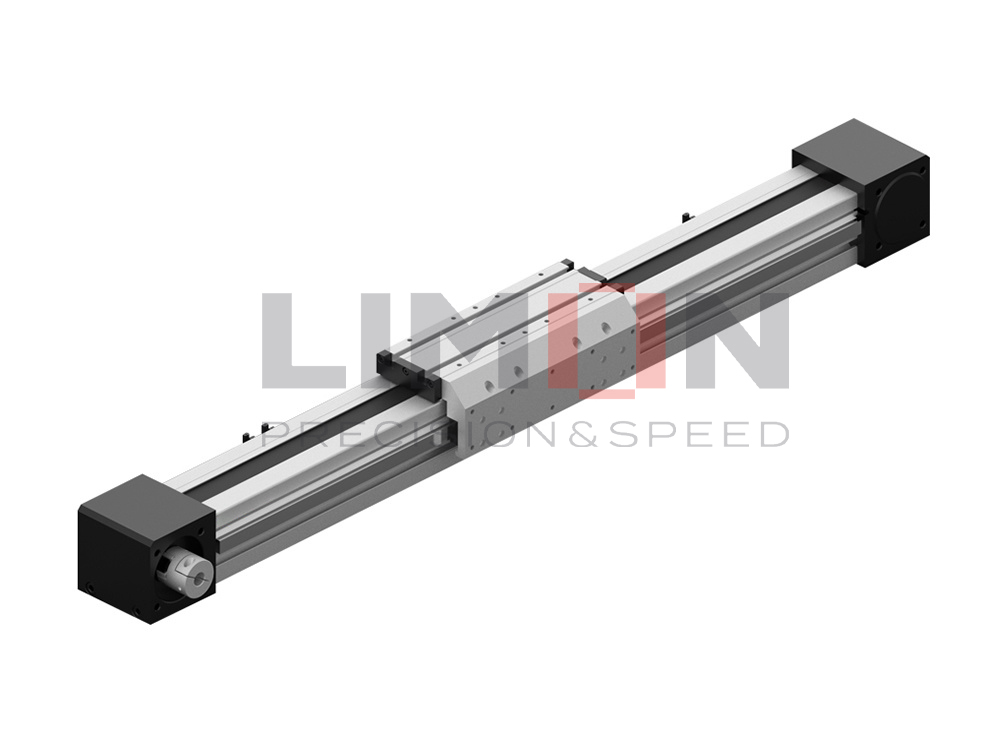
Are unreliable, noisy, or inaccurate motion components limiting the safety, comfort, and performance of your medical equipment design?
Linear actuators create controlled straight-line motion in medical equipment. They adjust beds and chairs, position imaging systems, automate diagnostic samples, regulate pumps, and support rehabilitation or mobility devices. Electric actuators are favored where designers need programmable movement, compact integration, quiet operation, repeatability, feedback, and clean operation.
This guide explores key medical applications, selection criteria, integration challenges, future trends, and Limon’s manufacturing advantages.
Why Are Linear Actuators Used in Medical Devices?
A linear actuator converts electrical, pneumatic, hydraulic, or mechanical energy into straight-line movement. In medical equipment, this movement may lift a patient, position an imaging component, move a diagnostic sample, control a pump, or adjust a treatment platform.
Electric actuators are particularly valuable because their position, speed, acceleration, and force can be programmed. They can incorporate encoders, limit switches, brakes, force sensors, and communication interfaces, allowing equipment controllers to monitor and adjust movement. Compared with many fluid-power systems, electric actuators can also reduce the need for pumps, hoses, valves, and fluid maintenance.
For engineers researching motorized linear actuators applications in medical devices, the central requirement is controlled movement that supports the intended function of the complete equipment. Performance cannot be judged by actuator thrust alone. Noise, smoothness, size, repeatability, duty cycle, cleaning requirements, power-loss behavior, and expected service life can be equally important.
Thomson identifies medical devices, personal mobility, factory automation, and material handling among the established application areas for electric actuators. Thomson’s actuator overview also highlights integrated motor and screw configurations for compact motion systems.
How Are Actuators Used in Patient Handling Equipment?
Medical beds, treatment tables, examination chairs, dental chairs, patient lifts, and mobility equipment use linear actuators to adjust height, tilt, backrest angle, leg position, and overall orientation. These movements help healthcare personnel position patients for examination, treatment, transfer, or comfort.
Patient-handling actuators must operate smoothly and predictably. Sudden starts or stops may create discomfort, while excessive noise can disturb patients in hospitals, clinics, rehabilitation centers, and home-care environments. The actuator must also support the intended static and dynamic loads throughout the movement range.
Vertical or inclined applications require careful attention to load holding and power-loss behavior. Depending on the risk analysis, the system may need a holding brake, mechanically resistant screw configuration, redundant support, emergency lowering function, or another protective measure.
Mounting geometry is equally important. Offset loading can produce bending moments or side forces that shorten actuator life. Appropriate pivots, external guidance, or structural support may therefore be required. Thomson’s patient-mobility information identifies seat leveling, tilting, and rail extension as representative electric-actuator functions. Thomson Patient Mobility
Where Do Actuators Support Imaging and Diagnostic Systems?
Medical imaging and diagnostic equipment often requires controlled positioning of patients, sensors, cameras, detectors, sample trays, or scanning assemblies. Linear actuators may be used in X-ray tables, ultrasound equipment, ophthalmic systems, dental imaging devices, laboratory analyzers, and other diagnostic platforms.
These applications can demand smooth low-speed movement, consistent repeatability, limited vibration, and compact installation. Positioning errors or mechanical deflection may affect image alignment, measurement consistency, or the operator’s workflow. The actuator must therefore be evaluated together with its linear guides, bearings, mounting surfaces, and supporting frame.
Ball screw actuators can provide efficient transmission and accurate positioning, while lead screw systems may offer a compact and economical solution for lighter loads. Belt-driven units may suit longer strokes and faster movement where the required force and rigidity remain moderate.
Noise is also an important design consideration, especially when equipment operates near patients. Motor selection, screw lead, bearing quality, lubrication, acceleration profiles, and structural resonance all influence perceived sound. Limon helps customers coordinate actuator transmissions with suitable linear guides, ball screws, and bearings to create stable motion assemblies.
How Are Linear Actuators Applied in Laboratory Automation?
Laboratory and life-science equipment uses linear motion to transport samples, move pipetting heads, operate syringes, position microplates, open and close access mechanisms, and control dispensing processes. Automated analyzers may contain several compact axes working together to perform preparation, transfer, inspection, and measurement.
Repeatability is often more important than maximum thrust in these systems. A sample tray must return to the correct location, while a dispensing mechanism must move through a controlled stroke. Compact dimensions are also valuable because designers frequently need to integrate multiple motion axes into a limited enclosure.
Stepper motor lead screw actuators can provide economical incremental positioning. Servo-driven ball screw systems may be selected for faster cycles, closed-loop feedback, or changing loads. Linear guides stabilize the carriage and prevent unwanted rotation or deflection.
Cleanliness and material compatibility must be considered at the complete-device level. Lubricant migration, particles, spills, cleaning chemicals, and temperature may influence the design. Enclosed or sealed mechanisms can help protect internal components, but the OEM must confirm compatibility with its actual cleaning process and risk requirements. Thomson describes enclosed motorized lead screw assemblies as a way to simplify integration and improve environmental protection. Thomson motorized lead screw actuators
What Roles Do Actuators Play in Treatment and Rehabilitation?
Treatment and rehabilitation equipment uses actuators to apply, resist, or guide movement according to a controlled profile. Examples include rehabilitation machines, therapeutic positioning systems, mobility aids, adjustable supports, robotic assistance equipment, and selected fluid-control mechanisms.
An actuator may adjust a patient support, move a therapy arm, change resistance, or repeat a programmed exercise. Smooth motion is essential because patients can be sensitive to vibration, sudden acceleration, or mechanical backlash. Closed-loop feedback can help the controller monitor position and detect whether movement differs from the commanded profile.
Force requirements should be evaluated carefully. The load may vary as the patient moves, changes posture, or resists the mechanism. A nominal payload figure may therefore be insufficient for motor and transmission sizing. Engineers should analyze the complete force profile, acceleration, mechanical leverage, friction, and foreseeable abnormal conditions.
In systems that interact directly with a person, actuator selection is only one element of safety. The complete device may need mechanical limits, current or force monitoring, emergency stops, guards, redundant sensing, and validated control behavior. These decisions must come from the medical-device manufacturer’s formal risk-management and verification process.
How Should a Medical Equipment Manufacturer Select an Actuator?
Selection begins with a detailed motion profile. Define the payload, external force, stroke, speed, acceleration, deceleration, positioning accuracy, repeatability, cycle rate, and duty cycle. Include the mounting orientation because gravity affects vertical and inclined axes differently from horizontal systems.
Next, evaluate mechanical constraints. Ball screw diameter, lead, efficiency, preload, buckling capacity, and critical speed can determine whether a screw-driven actuator is suitable. Linear guide capacity should include radial loads, side forces, and overturning moments. The design should avoid forcing the actuator rod or screw to act as an unintended external guide.
Environmental requirements may include noise limits, temperature, humidity, cleaning agents, dust protection, corrosion resistance, and lubricant control. Electrical considerations include supply voltage, motor type, encoder, limit switches, braking, electromagnetic compatibility, cabling, and communication.
Medical electrical equipment may also be subject to applicable device-level safety and essential-performance standards. The FDA currently recognizes IEC 60601-1 Edition 3.2 with relevant US national differences for equipment within its scope. FDA Recognized Consensus Standards Component selection alone does not establish device compliance; the OEM remains responsible for risk management, verification, validation, and regulatory assessment of the complete product.
What Trends Will Shape Medical Linear Motion?
Medical linear motion is moving toward smaller components, integrated motor-and-screw assemblies, quieter operation, connected feedback, and easier installation. Compact actuators help designers create portable diagnostic systems, home-care equipment, and devices containing several controlled axes.
More systems will use position, force, temperature, current, and operating-cycle data to monitor performance. This information can support preventive maintenance and help equipment developers identify abnormal friction, obstruction, or component wear. Integrated electronics may also reduce wiring and make it easier to coordinate multiple movements.
Customization will remain important because medical equipment frequently has strict limits on space, noise, mounting, cable routing, and user interaction. However, smarter control cannot compensate for poor screw accuracy, insufficient guide rigidity, unsuitable lubrication, or incorrect assembly.
Limon’s fully integrated production line covers linear guides, ball screws, linear bearings, and linear actuators. This manufacturing control helps us maintain consistent component quality and coordinate the mechanical elements of a motion system. Our direct-sales model gives customers efficient access to competitive manufacturer pricing, customization discussions, and experienced technical support. Limon supplies motion components to customer specifications; final suitability and medical-device compliance must be validated by the equipment manufacturer.
Conclusión:
Linear actuators enable precise adjustment, positioning, sample handling, fluid control, mobility, and rehabilitation functions in modern medical equipment. Limon provides reliable, high-performance linear motion solutions supported by integrated manufacturing, consistent quality, direct sales, and responsive technical assistance.
CTA: Developing or upgrading medical, laboratory, or healthcare equipment? Visit the Limon independent website to explore our linear actuators, ball screws, linear guides, and linear bearings. Contact the Limon technical team with your load, stroke, speed, accuracy, noise, duty-cycle, mounting, and environmental requirements to discuss product selection or a customized motion solution.
_1.jpg)