Is backlash, friction, or inconsistent positioning reducing the accuracy and reliability of your ball screw system?
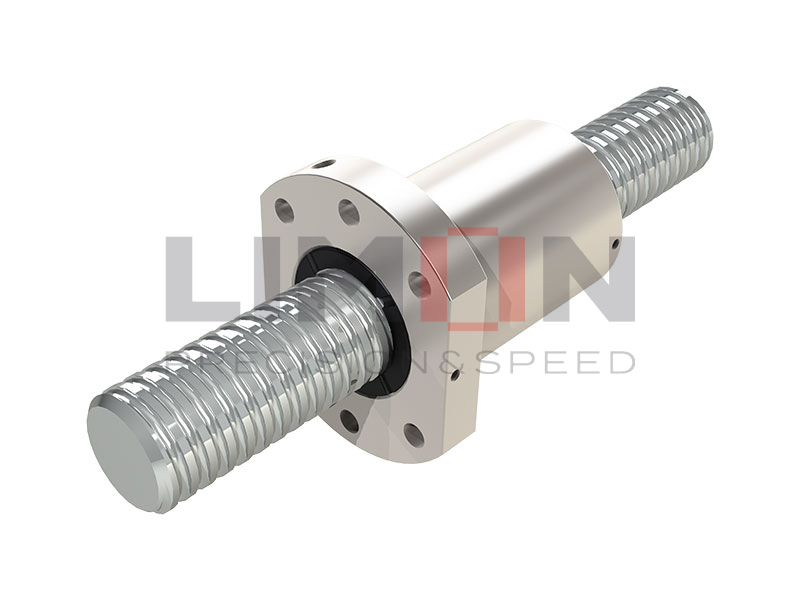
A ball nut is the moving component of a ball screw assembly that contains recirculating balls between the nut and screw shaft. It converts rotary motion into precise linear motion while supporting axial loads. The right ball nut can improve efficiency, rigidity, positioning accuracy, repeatability, and service life.
Why Is the Ball Nut So Important in a Ball Screw System?
Understanding its structure, preload, load capacity, accuracy, and selection criteria helps you build a more reliable linear motion system.
What Is a Ball Nut and How Does It Work?
A ball nut is a key component of a ball screw assembly. It works together with a threaded screw shaft and a series of precision balls to convert rotational movement into controlled linear movement. Unlike a conventional sliding nut, a ball nut uses rolling contact between the balls and the raceways on the screw shaft and inside the nut. This substantially reduces sliding friction and allows efficient transmission of motion and force.
Inside the ball nut, the balls circulate continuously through a designed return path. As the screw shaft rotates, the balls roll along the helical raceway while carrying the applied axial load. Once they reach the end of their active path, a circulation mechanism redirects them back into the loaded zone so that continuous motion can occur. Different ball screw nut designs use different circulation methods, including return pipes, deflectors, and end-cap systems.
This rolling mechanism is one of the main reasons ball screws are widely used in precision linear motion. Compared with conventional sliding screws, ball screws can provide high efficiency, lower friction, and excellent positioning characteristics. THK, for example, describes ball screws as feed screws that achieve high efficiency through rolling motion between the screw shaft and nut.
However, the ball nut is not simply a container for balls. Its raceway geometry, internal clearance, preload, ball diameter, circulation mechanism, sealing arrangement, and manufacturing accuracy all influence system performance.
In practical applications, the ball nut must also work together with linear guides, support bearings, motors, and control systems. The screw provides the driving motion, while the ball nut transfers that motion to the moving assembly.
For this reason, choosing a ball nut should always be treated as part of a complete linear motion design rather than as an isolated component.
What Are the Main Types of Ball Nut Designs?
Ball nuts can be categorized according to their ball circulation method, preload configuration, dimensions, and intended application. Understanding these differences helps engineers select a design that matches the requirements of the machine.
One common classification is based on ball circulation. Return-pipe designs use an external or integrated return path to collect and recirculate the balls. Deflector designs redirect the balls through a compact internal circulation path, allowing the nut to be relatively compact. End-cap designs are also used for certain large-lead or high-speed configurations.
Another important classification concerns preloading. Ball nuts may use single-nut offset preload, double-nut preload, or constant-pressure preload. In a double-nut configuration, two nuts are combined with a spacer or another mechanism to establish the required preload. Offset-preload designs create preload through a controlled difference in groove position, allowing a more compact structure. Constant-pressure designs can use an internal spring mechanism to maintain preload.
| Ball Nut Design Factor | Typical Consideration |
| Ball circulation | Return pipe, deflector, or end-cap |
| Nut configuration | Single nut or double nut |
| Precarga | Zero clearance, offset preload, or controlled preload |
| Plomo | Standard, large, or application-specific |
| Precisión | General positioning or precision positioning |
| Talla | Compact design or higher load capacity |
| Medio ambiente | Clean, dusty, humid, or contaminated conditions |
There is no universally best ball nut configuration. A compact automation axis may prioritize size and smooth operation, while a machine tool may place greater emphasis on rigidity, preload, accuracy, and high-speed performance.
Limon can help customers evaluate these factors based on the actual application rather than selecting a ball nut based solely on dimensions or price.
How Does Preload Affect Ball Nut Accuracy and Rigidity?
Preload is one of the most important characteristics of a precision ball nut because it directly affects axial clearance, rigidity, motion stability, and positioning performance.
Without appropriate preload, a ball screw may have axial clearance between the balls, nut, and raceway. When the direction of an external load changes, this clearance can contribute to unwanted displacement or backlash-like positioning errors. A controlled preload applies an internal force that removes or reduces this clearance and increases the rigidity of the nut.
This is particularly important for applications requiring precise positioning. When the moving assembly reverses direction, a properly preloaded ball nut can help minimize unwanted axial movement and maintain more consistent positioning.
However, more preload does not automatically mean better performance. Excessive preload can increase friction, torque, heat generation, and internal stress. It can also reduce efficiency and potentially shorten service life if the preload is inappropriate for the operating conditions.
The preload method also influences the construction of the ball nut. Double-nut systems use two nuts and a spacer, while offset-preload systems can achieve the required preload through differences in groove pitch or phase. Constant-pressure preload is another approach that can maintain a controlled preload through a spring-based structure.
Therefore, preload should be selected according to the machine’s actual requirements for stiffness, accuracy, speed, load, and service life.
Limon’s technical support can help customers understand these trade-offs when selecting ball screw components. With an integrated production line and direct manufacturer sales model, Limon can provide product guidance closer to the actual engineering application.
How Do You Choose the Right Ball Nut?
Selecting the right ball nut requires looking at the complete operating conditions rather than simply matching the nut to the screw diameter.
The first consideration is axial load. Determine the maximum and average loads that the ball nut will experience during operation. Repeated loading affects the expected service life, so both operating load and duty cycle should be considered.
Next, evaluate speed and acceleration. High-speed ball screw systems must operate within appropriate rotational-speed limits. Screw length, diameter, support arrangement, ball screw design, and critical speed can all influence the maximum usable speed. A ball screw can resonate if its rotational speed approaches the natural frequency of the screw shaft, so the operating speed needs to remain below the relevant limits.
Plomo is another key parameter. A larger lead can provide greater linear travel per revolution and can be suitable for high-speed feed applications. A smaller lead may provide finer mechanical resolution and greater mechanical advantage.
You should also consider:
- Precisión de posicionamiento requerida
- Repetibilidad
- Axial rigidity
- Preload requirements
- Longitud de la carrera
- Screw diameter
- Velocidad de funcionamiento
- Aceleración y desaceleración
- Vida útil prevista
- Lubrication conditions
- Contamination protection
- Installation accuracy
Ball nut selection should also account for the supporting components. The ball screw should be properly aligned with the linear guide system, while support bearings and mounting structures must provide sufficient rigidity.
Service life is generally influenced by the basic dynamic load rating and applied axial load, while actual performance can also be affected by mounting precision, lubrication, and operating conditions.
For this reason, Limon approaches ball screw selection from a system perspective. Customers can discuss load, travel, speed, accuracy, and operating conditions with our technical team before selecting an appropriate configuration.
What Causes Ball Nut Problems and How Can You Prevent Them?
A high-quality ball nut can provide long-term reliable performance, but incorrect installation, insufficient lubrication, contamination, excessive loading, and misalignment can significantly reduce service life.
Contaminación is one of the most common concerns. Dust, metal chips, abrasive particles, and moisture can enter the ball nut and damage the raceways or rolling elements. Appropriate seals, covers, wipers, or other contamination-protection measures should therefore be considered according to the machine environment.
Lubricación is equally important. The lubricant reduces friction between the rolling elements and raceways and helps control wear and heat. The correct lubricant and maintenance interval should be determined according to speed, load, operating temperature, and environmental conditions.
Desalineación can also create problems. A ball screw should not be expected to compensate for significant installation errors. If the screw is not correctly aligned with the linear guide system, additional forces can be introduced into the nut, increasing resistance and wear.
Typical warning signs include:
| Symptom | Posible causa |
| Increased running torque | Misalignment, preload, contamination, or lubrication problems |
| Abnormal noise | Damaged balls, raceways, contamination, or insufficient lubrication |
| Positioning error | Backlash, wear, lead error, or installation problems |
| Increased temperature | Excessive preload, speed, friction, or lubrication issues |
| Uneven movement | Contamination, damaged rolling elements, or alignment issues |
Regular inspection can help identify problems before they develop into major machine failures. If unusual noise, vibration, torque, or positioning behavior appears, the ball screw assembly should be inspected rather than continuing operation under potentially damaging conditions.
Why Choose Limon for Ball Nut and Ball Screw Solutions?
A ball nut is a precision component, but its performance ultimately depends on manufacturing quality and how well it integrates with the rest of the linear motion system.
Limon is a linear motion product manufacturer providing ball screws alongside linear guide rails, linear bearings, and linear actuators. Our fully integrated production line gives us greater control over manufacturing processes and product consistency, helping us provide reliable components for different industrial applications.
For customers, this means the purchasing process can go beyond simply finding a standard ball nut. Through Limon’s direct-sales model, customers can communicate more directly with the manufacturer about dimensions, performance requirements, application conditions, and technical questions.
Quality is particularly important for ball screw components. The raceway geometry, ball circulation, preload condition, dimensional accuracy, and assembly quality all contribute to the final performance of the system. Consistent manufacturing therefore plays an essential role in achieving smooth and predictable motion.
Limon also understands that a ball nut rarely operates alone. In an actual machine, the ball screw works together with linear guides, bearings, motors, couplings, and control systems. A mismatch between these components can limit the performance of the entire machine.
That is why Limon combines manufacturing capabilities with technical support. Customers can evaluate the ball screw and ball nut together with the surrounding linear motion components, helping create a more coordinated solution.
Whether the application involves CNC machinery, industrial automation, positioning equipment, robotics, assembly systems, or other precision machinery, Limon aims to provide reliable components backed by practical technical support.
Conclusión
The ball nut is a critical part of a ball screw system, responsible for transferring rotational movement into controlled linear motion while carrying axial loads. Its circulation design, preload, accuracy, load capacity, speed capability, and manufacturing quality can all influence the performance of the complete machine.
Choosing the right ball nut therefore requires more than checking dimensions. Load, speed, lead, accuracy, rigidity, preload, lubrication, contamination, installation, and expected service life should all be considered together.
With a fully integrated production line, direct manufacturer sales, high-quality linear motion products, and professional technical support, Limon ofrece soluciones de movimiento lineal fiables y de alto rendimiento for demanding industrial applications.
When precision, stability, and repeatability matter, the right ball nut can make a significant difference—and Limon can help you build the motion system around it.